💵
Value My Car → We Buy Cars — Even If You Don’t Buy From Us.
Get a real offer on your vehicle in minutes. No obligation, no pressure.





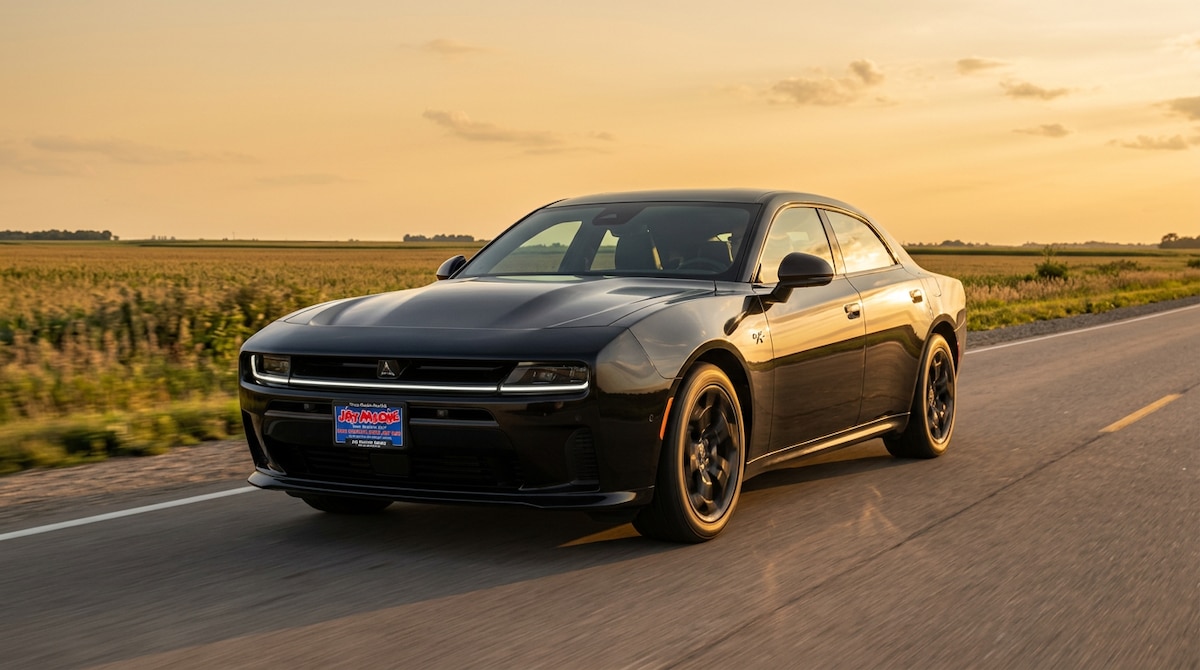
The 2026 Dodge Charger R/T and Scat Pack use the same 3.0L Hurricane twin-turbo inline-six — the R/T in Standard Output (420 hp) and the Scat Pack in High Output (550 hp). The R/T is the value play; the Scat Pack is the performance play. Both are real muscle cars.
I’m Jordan Malone-Forst, Assistant General Manager at Jay Malone CDJR in Hutchinson. This guide breaks down exactly what separates the R/T from the Scat Pack — the engines, the brakes, the Track Package, the tech, and how each fits the way people actually drive in central Minnesota. For the full lineup, see our 2026 Dodge Charger buyer’s guide or our gas vs electric comparison.
For most central Minnesota buyers, it comes down to how often you’ll actually use the extra performance.
Buy the R/T if: 420 horsepower is plenty (and it is), you want a great daily driver with serious muscle car looks at the lowest entry price, and you don’t plan to run the car at a track or autocross.
Buy the Scat Pack if: you want the most powerful gas Charger you can buy, you’ll occasionally use Launch Control and Line Lock, you want Brembo brakes standard, and the step up in price doesn’t change your decision.
There’s no wrong answer here. The R/T at 420 hp is faster than the V8 R/T it replaces and faster than most cars on the road. The Scat Pack at 550 hp is genuinely fast — quicker than the outgoing 6.4L 392 V8 Scat Pack — and includes performance features the R/T doesn’t.
Both engines share the same 3.0L displacement, the same inline-six layout, the same dual-turbocharger design, and the same 8-speed 880RE automatic transmission. What separates them is how they’re built inside and how they’re tuned.
Hurricane Standard Output (SO) in the R/T:
Hurricane High Output (HO) in the Scat Pack:
Both engines deliver most of their peak torque low in the rev range — low-end response is instant and turbo lag is barely perceptible. The HO is the more aggressive tune mechanically, but both engines feel similar in normal driving. The difference shows up when you put your foot down.
Meaningfully — the Scat Pack is about 0.7 seconds quicker to 60 mph. Here’s how the two compare:
| Spec | SIXPACK R/T | SIXPACK Scat Pack | Difference |
|---|---|---|---|
| Horsepower | 420 hp | 550 hp | +130 hp |
| Torque | 468 lb-ft | 531 lb-ft | +63 lb-ft |
| 0-60 mph | 4.6 sec | 3.9 sec | -0.7 sec |
| Quarter mile | 12.9 sec | 12.2 sec | -0.7 sec |
| Top speed | 168 mph | 177 mph | +9 mph |
For context: 0.7 seconds in a 0-60 run is a meaningful difference. That’s the gap between a quick car and a genuinely fast car. Both Chargers feel quick from behind the wheel; the Scat Pack feels noticeably more aggressive when you actually need the power — passing on Highway 7, accelerating onto I-94, or just enjoying an empty backroad.
Day-to-day, 95% of driving doesn’t require either Charger’s full power output. Both cruise comfortably at highway speeds with the engine barely working. The Scat Pack’s advantage shows up specifically when you ask for it.
Both R/T and Scat Pack share the same chassis, suspension geometry, and standard 20-inch wheels. The brakes and available tires are where they diverge.
The Track Package is a Scat Pack-only option that adds genuinely useful performance equipment — worth it if you plan to actually use it.
Honest take: the Track Package makes sense if you genuinely plan to use it. The tires alone are worth much of the package if you’re going to drive aggressively. If you’ll never take the car to a track or autocross event, the standard Scat Pack tire setup is plenty.
Both R/T and Scat Pack share most standard equipment — including the 12.3-inch Uconnect 5 touchscreen, wireless Apple CarPlay® and Android Auto™, full LED lighting, standard AWD with selectable RWD mode, Active Driving Assist, Blind Spot Monitoring, Forward Collision Warning, and Drowsy Driver Detection.
| Feature | R/T | Scat Pack |
|---|---|---|
| 16-inch driver display | Available (R/T Plus) | Standard |
| Head-up display | Available (R/T Plus) | Standard |
| 9-speaker Alpine audio | Available (R/T Plus) | Standard |
| Brembo 6-piston front brakes | Not available | Standard |
| Launch Control | Not available | Available (Track Pack) |
| Line Lock | Not available | Available (Track Pack) |
| Drive eXperience Recorder | Not available | Available (Track Pack) |
| 360-degree camera | Available (R/T Plus) | Standard |
| Track Package availability | Not available | Available |
| Carbon & Suede Package | Not available | Available |
Note the R/T Plus package: if you order the R/T with the Plus equipment group, you get most of the comfort and tech features that come standard on the Scat Pack (16-inch display, head-up display, Alpine audio, 360 camera, heated/ventilated seats) without paying for the upgraded engine. For buyers who like the R/T’s power level but want the Scat Pack’s interior tech, the R/T Plus is a strong middle ground.
Moving from the R/T to the Scat Pack (same body style) gets you a genuinely more complete performance car.
For most buyers, that’s good value — the brakes and tech alone justify much of the step up, and the extra power is a bonus. The R/T Plus equipment group narrows the tech gap but doesn’t close it entirely. Because pricing and incentives change regularly, we don’t publish figures here — reach out and we’ll give you exact, current numbers on either trim.
Both trims require 91-octane premium fuel, and the Scat Pack’s higher output means somewhat higher fuel use than the R/T.
Insurance costs typically run 10-15% higher for the Scat Pack vs the R/T due to the higher horsepower output and Brembo brakes. Get quotes for both before you buy if insurance matters to your decision.
On resale, Scat Pack trims historically hold value better than equivalent R/Ts because they’re the flagship trim within their powertrain family. Expect the Scat Pack to retain somewhat more of its value after five years than the equivalent R/T, which partially offsets the higher purchase price.
Honest assessment of how each trim fits the way people actually drive in Hutchinson and central Minnesota:
Key Takeaways
For most buyers, yes. The Scat Pack adds 130 horsepower, Brembo brakes, and standard tech features (16-inch display, head-up display, Alpine audio, 360 camera) that you’d otherwise add to the R/T through the R/T Plus equipment group. Net, you’re paying mostly for the extra power and the Brembos — reasonable value for a performance car. Contact us for exact, current pricing on either trim.
No — the engines are not interchangeable as factory options. The HO engine is only available in the Scat Pack trim with its standard supporting equipment (Brembos, forged internals, tuning calibration). You can’t order an R/T with the HO engine. If you want the 550-hp Hurricane, you need to step up to the Scat Pack.
Yes. Both Hurricane engines are designed for 91-octane premium fuel. Using lower-octane fuel will reduce performance via the engine’s knock sensor adaptive tuning and may affect long-term reliability. Plan on premium gas for either trim.
Scat Pack insurance typically runs 10-15% higher than R/T insurance due to the higher horsepower rating and replacement cost. Specific premiums vary significantly by driver age, location, and driving record. Get quotes from your insurance provider for both trims before you buy if cost is a factor.
If you’ll use it. The 305/35ZR20 high-performance tires alone are worth much of the package if you drive aggressively. Add Line Lock, Launch Control, and the Drive eXperience Recorder dashcam, plus a day at Radford Racing School, and the value is real for buyers who track or autocross. If you’ll never use those features, skip it.
No — actually slightly worse with the standard high-performance tires. Both trims come with standard AWD and selectable RWD mode. For winter driving, the R/T’s standard tires handle slightly better than the Scat Pack’s wider, more performance-oriented setup. If the Charger is your primary winter vehicle, plan on dedicated winter tires for either trim.
No. The Carbon & Suede Package is a Scat Pack-only option. The R/T uses leatherette seats as standard, with leather available in the R/T Plus equipment group.
It depends on whether you can charge at home. The Daytona Scat Pack BEV produces 670 hp (vs 550 hp on the gas Scat Pack) and is quicker to 60 mph. But the Daytona only makes financial sense if you can charge at home regularly. See our gas vs electric comparison for the full breakdown.
About the Author
I’m Jordan Malone-Forst, Assistant General Manager at Jay Malone Motors in Hutchinson, MN. I’m proud to be part of the family business my dad Jay started in 2005 — and even prouder to serve the community I grew up in. If you have questions about any Chrysler, Dodge, Jeep, or Ram vehicle — or just want to talk through your options — reach out. I’d love to help.
Last reviewed July 2026 by Jordan Malone-Forst, Jay Malone CDJR.