Quick Answer
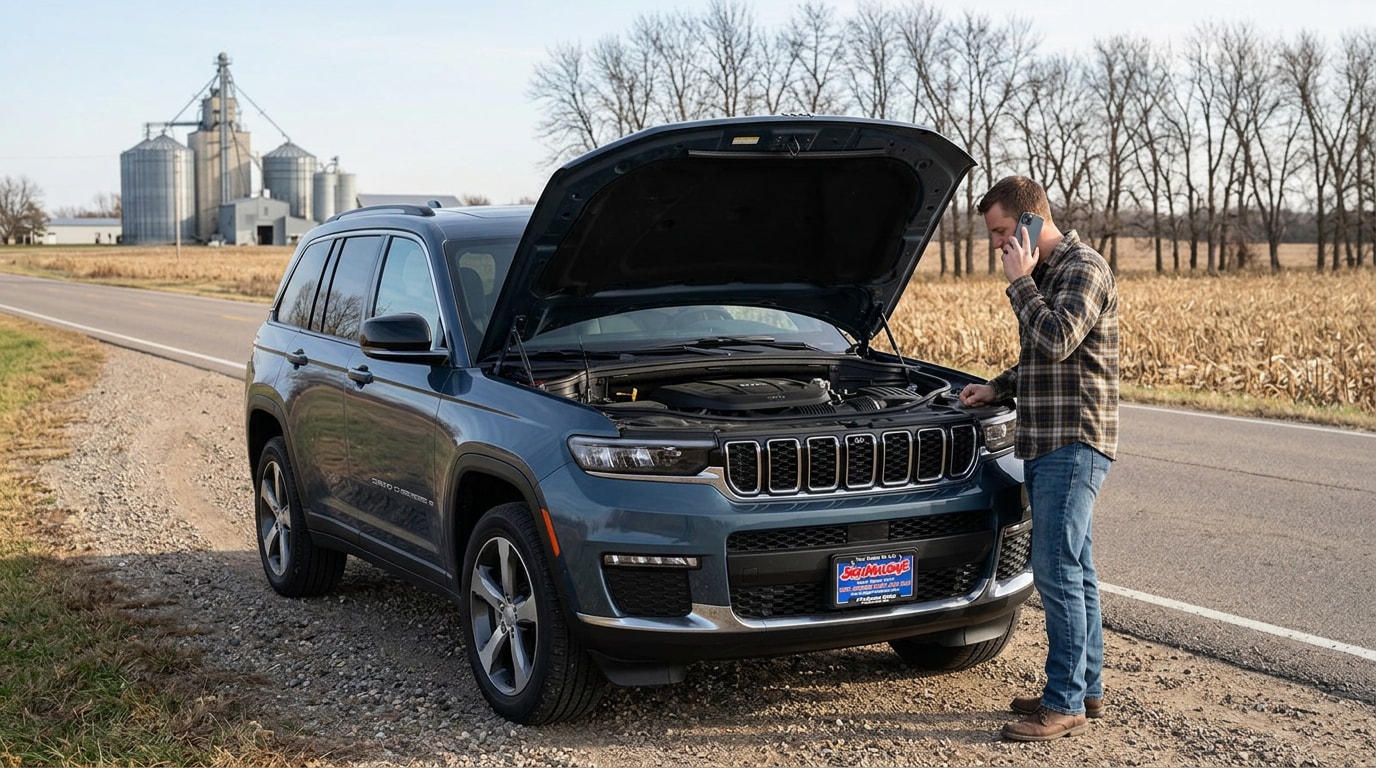
Cold weather is hard on car batteries: it slows the chemical reaction that produces power while making your engine harder to turn over, so a battery that seemed fine in fall can fail on the first deep-freeze morning. Most batteries last three to five years, and Minnesota winters tend to push them toward the shorter end. Watch for slow cranking, a battery or check engine light, and electrical glitches — and get the battery tested before winter rather than after it strands you. Our certified technicians at Jay Malone CDJR in Hutchinson test and replace batteries for all makes and models, any year, whether or not you bought the vehicle from us.
Why do car batteries die in cold weather?
Cold hits a battery twice over: it slows the chemical reaction inside the battery that creates electrical power, and it thickens your engine oil so the engine takes more power to turn over. Less power available, more power needed — that’s the squeeze that strands people on cold mornings.
A car battery makes power through a chemical reaction, and that reaction slows down as the temperature drops. The colder it gets, the less of the battery’s rated power is actually available to crank the engine. At the same time, cold thickens the oil throughout your engine, so the starter has to work harder to spin everything over. Your battery is being asked to deliver more at the exact moment it can deliver less.
A healthy battery handles that trade-off fine. A battery that’s already weak or aging often can’t — which is why a battery that started your vehicle without complaint in October can leave you stranded in the driveway in January. The cold didn’t suddenly break it; it exposed a battery that was already on its way out.
How long does a car battery last in Minnesota?
Most car batteries last three to five years, but Minnesota’s climate tends to shorten that lifespan. Extreme cold and extreme heat are both hard on a battery, and we get plenty of both.
Three to five years is the typical range, but it’s an average, not a guarantee. Hot summers quietly wear a battery down internally, and then hard winters expose that wear when you can least afford it. Short trips make it worse: if you’re mostly running quick errands around Hutchinson, the alternator may never get enough run time to fully recharge the battery between starts, leaving it chronically undercharged heading into the cold. If your battery is more than three years old, it’s worth having it tested every fall — a quick check now is a lot easier than a no-start later.
What are the warning signs of a dying battery?
A failing battery usually gives you hints before it quits completely. The most common is an engine that cranks slowly when you start it.
Watch for these signs, especially as the temperature drops:
- Slow or labored cranking. If the engine turns over more slowly than usual before starting, the battery is struggling.
- A battery or check engine warning light. Either can point to a charging-system or battery issue worth getting read.
- Dimming lights or electrical glitches. Headlights that dim at idle, flickering interior lights, or accessories acting up can signal a weak battery.
- Clicking when you turn the key. A rapid clicking without the engine catching often means the battery doesn’t have the power to start.
- It’s simply old. If the battery is past three to five years, treat age itself as a warning sign and have it tested.
If a check engine light is part of the picture, it’s worth understanding what that light can mean — our guide on why your check engine light is on walks through it.
How can I help my battery survive a Minnesota winter?
The best single step is to have the battery tested before winter. Beyond that, a few habits help it start strong on the coldest mornings.
A handful of practical things make a real difference:
- Get it tested in the fall. A battery test takes only a few minutes and tells you whether yours has the strength to make it through winter.
- Keep the terminals clean. Corrosion on the terminals interferes with the connection. Clean, tight terminals let the battery deliver its full power.
- Park inside when you can. Even an unheated garage is meaningfully warmer than an open driveway and eases the load on cold mornings.
- Drive long enough to recharge. If most of your trips are short, an occasional longer drive helps the alternator bring the battery back up to a full charge.
- Consider a block heater for severe cold. Warming the engine reduces how hard the battery has to work at startup — a common setup for Minnesota winters.
Where can I get my battery tested or replaced near Hutchinson?
Our service team tests and replaces batteries for all makes and models, any year, whether or not you bought the vehicle from us. A test is quick, and if you need a new battery we’ll fit the right one for your vehicle.
If your battery is getting up there in age or you’ve noticed any of the warning signs above, don’t wait for a sub-zero morning to find out. We’ll test the battery and charging system, tell you honestly where it stands, and install a genuine Mopar battery matched to your vehicle if it’s time. We’re a family-owned dealership that’s served Hutchinson, Litchfield, Glencoe, Dassel, Cokato, Brownton, and the rest of McLeod County and central Minnesota since 2005 — and our service lane is open to you no matter what you drive.
Key Takeaways
- Cold slows the battery’s power output while making the engine harder to turn over.
- Most batteries last three to five years; Minnesota’s climate pushes toward the shorter end.
- Warning signs: slow cranking, warning lights, dimming lights, clicking, or simply old age.
- Have the battery tested in the fall, keep terminals clean, and park inside when you can.
- Jay Malone CDJR tests and replaces batteries for all makes and models, any year, whether or not you bought from us.
Frequently Asked Questions
At what temperature do car batteries start to struggle?
A battery loses a meaningful share of its cranking power as temperatures fall below freezing, and the effect gets more pronounced the colder it gets. By the time Minnesota hits the deep sub-zero range, even a healthy battery is working hard — and a weak one often can’t keep up. That’s why a fall battery test matters here.
How often should I replace my car battery in Minnesota?
Most batteries last three to five years, and our climate tends to shorten that. Rather than waiting for a fixed mileage or date, have the battery tested each fall once it’s past about three years old, and replace it when a test shows it’s weakening — ideally before winter rather than after a no-start.
Can a battery just die overnight in the cold?
Yes. A battery that was already weak can seem to fail suddenly when a cold snap arrives, because the cold pushes it past the point where it can still start the engine. The decline was usually already underway — the cold just revealed it. A fall test helps you catch it first.
Is it worth testing a battery that seems fine?
It is, especially heading into winter. A battery can seem fine in mild weather and still lack the reserve to start in deep cold. A quick test shows how much capacity it actually has left, so you can replace it on your schedule instead of on a freezing morning.
Do you test batteries for vehicles I didn’t buy from you?
Yes. Our certified technicians test and replace batteries for all makes and models, any year, whether or not you purchased the vehicle from us. You’re welcome in our service lane no matter what you drive.
Don’t let winter catch your battery first
A few minutes in the fall can save you a frozen morning in January. If your battery is getting older or showing any warning signs, bring your vehicle in — any make, any year — and we’ll test it, tell you where it stands, and get you ready for whatever winter brings. For more seasonal service tips, head back to our Jeep, Ram & Dodge service guide.
About the Author
I’m Brady Forst, Service Manager at Jay Malone CDJR in Hutchinson, MN. My team and I keep Jeep, Ram, Dodge, and Chrysler vehicles — and plenty of other makes — running right for drivers all across McLeod County and central Minnesota. Before the cold sets in, bring it in and we’ll get you winter-ready.
Last reviewed June 2026 by Brady Forst, Jay Malone CDJR.