💵
Value My Car → We Buy Cars — Even If You Don’t Buy From Us.
Get a real offer on your vehicle in minutes. No obligation, no pressure.





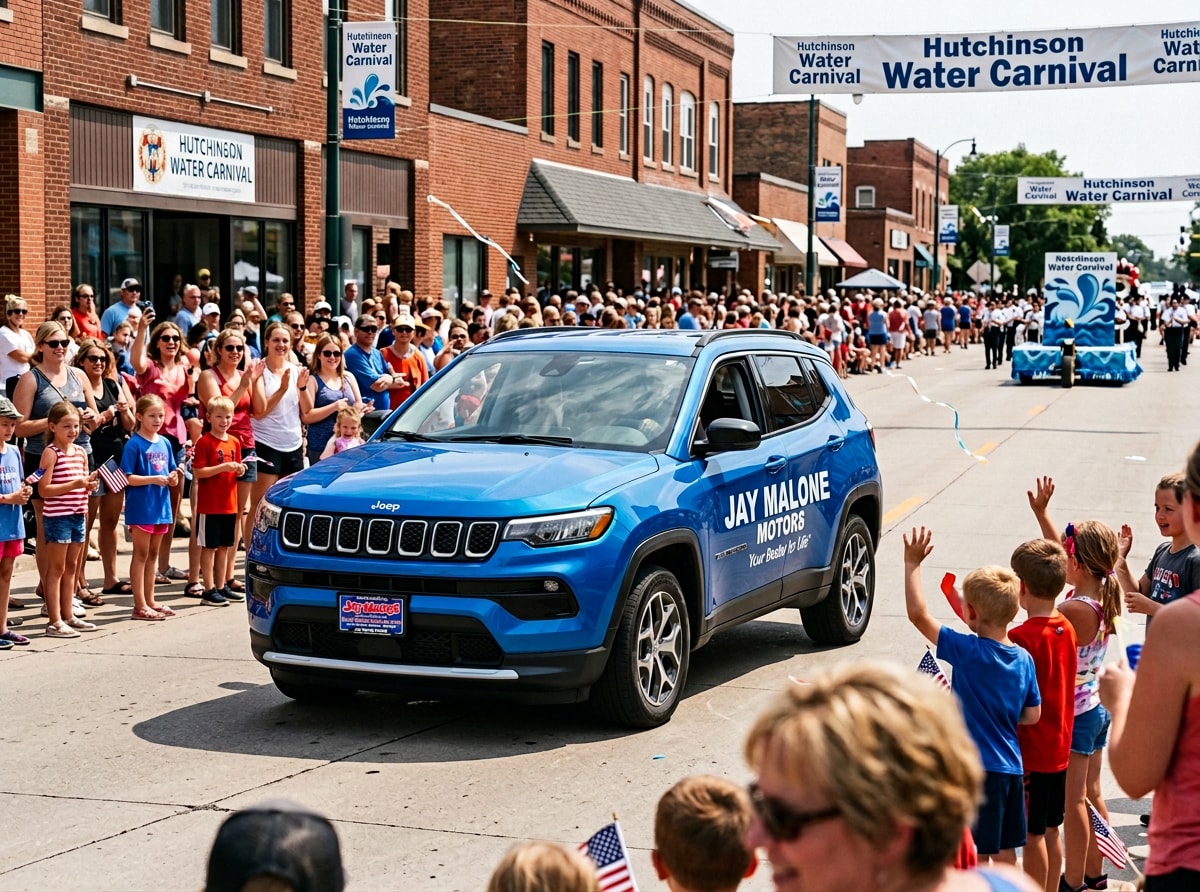
I am Jordan Malone-Forst, Assistant General Manager at Jay Malone Motors in Hutchinson, MN, and the 4WD system question is one of the most important decisions in the 2026 Jeep Compass lineup — even though it does not always get the attention it deserves. Every Compass is a 4x4, but not every Compass has the same 4WD system. The difference between Jeep Active Drive and Jeep Active Drive Low is the difference between a capable all-weather SUV and a Trail Rated off-road vehicle.
This blog breaks down both systems completely — how they work, what they can and cannot do, and which one makes sense for your specific driving situation in central Minnesota. For the full buying picture, start with our 2026 Jeep Compass Buyer's Guide. For the full Trailhawk capability story, see our Trailhawk deep dive blog.
The 4WD system is determined entirely by which trim you choose. There is no option to upgrade or downgrade the system within a trim — it is fixed.
| Trim | 4WD System | Selec-Terrain Modes | Low Range | Hill Descent Control |
|---|---|---|---|---|
| Latitude | Jeep Active Drive | Auto, Snow, Sand/Mud | No | No |
| Limited | Jeep Active Drive | Auto, Snow, Sand/Mud | No | No |
| Trailhawk | Jeep Active Drive Low | Auto, Snow, Sand/Mud, Rock | Yes — 20:1 crawl ratio | Yes — standard |
Jeep Active Drive is a full-time 4x4 system with rear-axle disconnect. It is standard on the Compass Latitude and Limited. Here is what that means in practice.
Full-time 4x4 means the system is always engaged and always monitoring traction. There is no switch to flip between 2WD and 4WD — the system manages torque distribution automatically and continuously. When it detects a wheel losing traction, it redistributes torque to the wheels with better grip without any driver input required.
Rear-axle disconnect is the efficiency feature. When conditions do not require 4WD engagement — dry pavement, highway cruising — the system decouples the rear axle to reduce mechanical drag and improve fuel economy. When traction conditions change, the system reconnects the rear axle seamlessly before you notice any slip. This is what allows the Compass to achieve its 24/32 mpg EPA fuel economy ratings while still delivering full-time 4WD capability when needed.
Jeep Active Drive is paired with three Selec-Terrain modes: Auto, Snow, and Sand/Mud. It handles the following conditions confidently:
What Jeep Active Drive does not have is a low-range setting. It is a single-speed transfer case. For the vast majority of what compact SUV buyers in central Minnesota encounter day to day, Jeep Active Drive is more than adequate. The system becomes a limitation only when you need the low-range torque multiplication that Active Drive Low provides — steep rocky terrain, deep mud extraction, or slow-speed technical trail navigation.
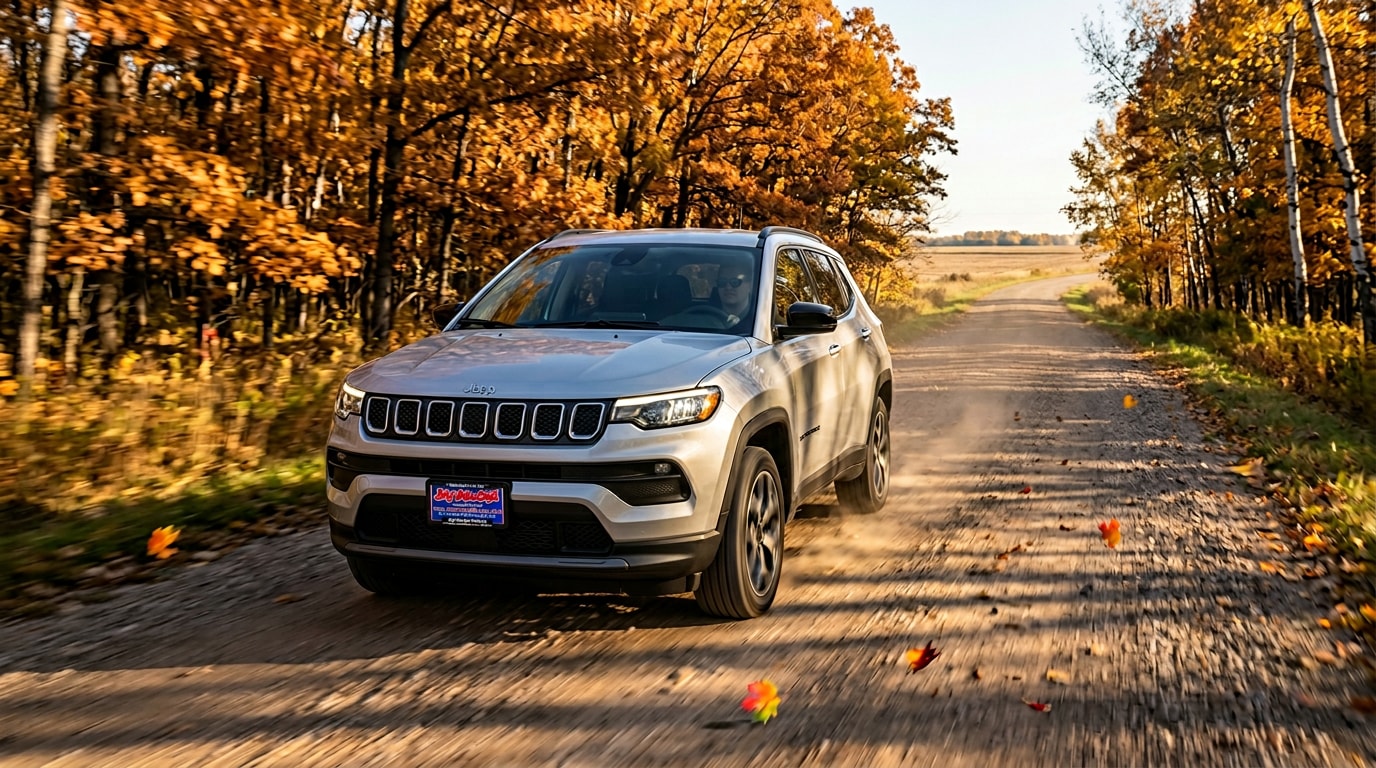
Jeep Active Drive Low is exclusive to the Compass Trailhawk. It builds on the Active Drive foundation and adds a low-range transfer case with a 20:1 crawl ratio. That single addition changes the vehicle's capability profile significantly.
What the low-range setting does: When you engage low range, the transfer case multiplies the torque delivered to the wheels dramatically. At a 20:1 ratio, the engine turns 20 times for every single rotation at the output. The result is maximum torque at the wheels at very low, controlled speeds — the kind of power delivery that lets you crawl over an obstacle at walking pace rather than needing momentum to clear it.
Why it matters beyond rocks: The low-range system is not just for rock crawling. In a central Minnesota context, it is useful any time you need maximum traction at very low speed:
Active Drive Low also enables Rock mode in Selec-Terrain and works in combination with Hill Descent Control — neither of which is available without the low-range system. The combination of low-range torque, Rock mode calibration, and Hill Descent Control is what earns the Trailhawk the Trail Rated badge and makes it a genuinely capable off-road compact SUV rather than a capable all-weather one.
Selec-Terrain is standard on all three Compass trims. The Latitude and Limited get three modes. The Trailhawk gets four. Each mode adjusts throttle response, transmission shift points, torque distribution, and traction and stability control calibration to optimize the vehicle for a specific surface condition.
Auto — All Trims
The default mode for normal driving conditions. The system continuously monitors inputs from multiple sensors and automatically selects the optimal traction, throttle, and stability settings for current conditions. Auto is the right mode for dry pavement, light rain, and everyday mixed driving. Most buyers leave it here the majority of the time and only switch modes when conditions specifically call for it.
Snow — All Trims
Calibrated specifically for low-traction winter conditions. Snow mode reduces throttle sensitivity so power builds more gradually at launch, reducing wheelspin on ice and packed snow. Transmission shift points are adjusted for smoother, more controlled acceleration. Stability and traction control thresholds are recalibrated to allow a small degree of controlled wheel slip that helps maintain momentum in snow rather than cutting power completely. For buyers in Hutchinson, Glencoe, Winsted, and the surrounding area who deal with icy county roads from November through March, Snow mode is the mode you engage every winter morning when conditions are slick.
Sand/Mud — All Trims
Designed for loose, deep, or slippery surfaces where some wheel slip is actually beneficial. Sand/Mud mode allows more controlled wheel slip than Auto or Snow to help the tires find purchase and build momentum in soft surfaces. Throttle response is adjusted for better management in conditions where too little power leaves you stuck and too much spins the tires deeper. For central MN buyers, this is the mode for muddy boat ramps in spring, soft field approaches, and wet gravel after heavy rain.
Rock — Trailhawk Only
Rock mode engages the Active Drive Low system for maximum torque at crawl speeds and calibrates the vehicle for slow-speed technical terrain navigation. Throttle sensitivity is significantly reduced so the driver has very fine control over small power increments. Stability control is recalibrated to allow the wheels to articulate and find grip on uneven surfaces without the system cutting power prematurely. Hill Descent Control is also active in Rock mode. This is the mode for rocky trails, steep technical descents, and highly uneven terrain where precise, slow-speed vehicle control is essential. Not available without Active Drive Low — exclusive to the Trailhawk.
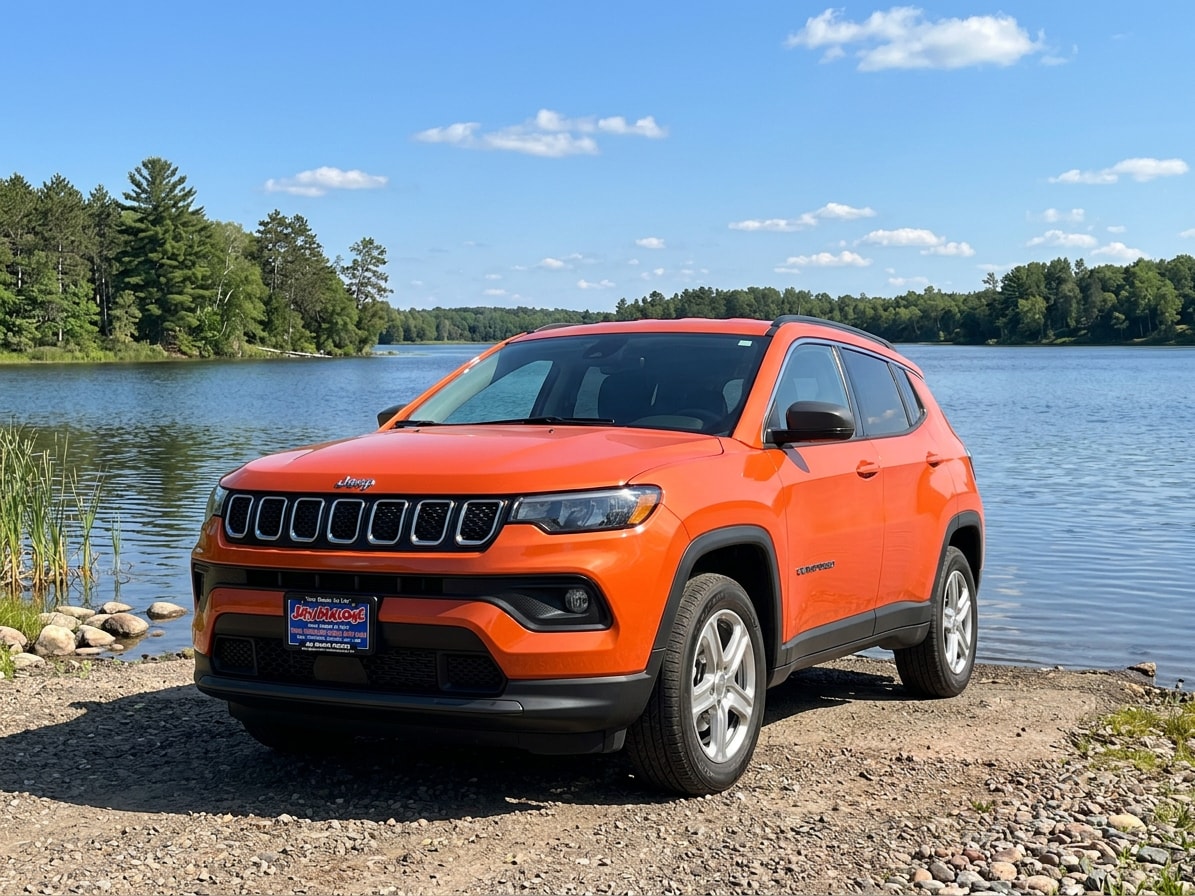
Hill Descent Control is standard on the Compass Trailhawk and is not available on the Latitude or Limited in any configuration. It works in combination with the Active Drive Low system and is most useful in Rock mode on the Trailhawk.
When Hill Descent Control is engaged, the system automatically applies the brakes to maintain a slow, controlled speed while descending steep terrain — without the driver needing to modulate the brake pedal. The driver steers while the system manages speed, allowing full attention to be on line selection and obstacle avoidance rather than brake management.
In a central Minnesota context, Hill Descent Control is useful for:
For most everyday driving, you will not use Hill Descent Control. But for the specific situations where it is needed — particularly the slippery boat ramp scenario that is common in central Minnesota during spring and fall — it is a genuinely useful system that the Latitude and Limited simply do not have.
Here is how both systems perform across the specific conditions buyers in Hutchinson, Glencoe, Litchfield, Dassel, and Silver Lake actually encounter.
| Condition | Active Drive (Latitude/Limited) | Active Drive Low (Trailhawk) |
|---|---|---|
| Icy county roads | Excellent (Snow mode) | Excellent (Snow mode) |
| Packed snow and gravel | Excellent | Excellent |
| Dry and wet pavement | Excellent | Excellent |
| Muddy boat ramps | Good (Sand/Mud mode) | Excellent (Sand/Mud + low range) |
| Gravel road access | Excellent | Excellent |
| Steep slippery inclines | Capable | Excellent (low range) |
| Steep descents | Capable (hill start assist only) | Excellent (Hill Descent Control) |
| Light trail use | Capable | Excellent |
| Technical rocky terrain | Limited | Capable (Rock mode) |
| Deep mud extraction | Limited | Good (low range + Sand/Mud) |
Choose Jeep Active Drive (Latitude or Limited) If:
Choose Jeep Active Drive Low (Trailhawk) If:
My Honest Take
For most buyers in Hutchinson and central Minnesota who deal with winter roads, gravel, and the occasional muddy situation — Jeep Active Drive on the Latitude or Limited handles everything you will encounter. The system is solid, the Snow mode works well, and the rear-axle disconnect keeps your fuel economy in check. The step to Active Drive Low on the Trailhawk is worth it when you have a specific use case that requires low-range capability, when towing matters, or when you genuinely go off-pavement beyond what gravel and light mud require. Do not buy the Trailhawk for the 4WD system alone if you are a pavement-and-light-gravel buyer. Do buy it if you need what it actually does.
Key Takeaways
Jeep Active Drive functions similarly to what most manufacturers call all-wheel drive in that it automatically distributes torque between the front and rear axles without driver input. Jeep uses the 4x4 designation because the system delivers the traction capability of a traditional 4WD system rather than the lighter-duty all-wheel drive found on many crossovers. The rear-axle disconnect feature is the efficiency innovation that allows it to behave like AWD on dry pavement while retaining full 4x4 engagement when traction demands it.
No. Jeep Active Drive Low with the 20:1 crawl ratio is exclusively available on the Compass Trailhawk. It is not an option or package that can be added to the Latitude or Limited — it is a fundamental hardware difference built into the Trailhawk's drivetrain. If Active Drive Low capability is important to you, the Trailhawk is the only Compass that delivers it.
Yes. Snow mode is included in the Selec-Terrain system on all three Compass trims — Latitude, Limited, and Trailhawk. The Latitude and Limited get Auto, Snow, and Sand/Mud modes. The Trailhawk adds Rock mode. Snow mode on the Latitude calibrates throttle response and traction control for low-traction winter conditions and is a genuine improvement over Auto mode on icy roads.
No. Hill Descent Control is standard only on the Compass Trailhawk. It works in combination with the Active Drive Low system and is not available on the Latitude or Limited in any configuration. Both the Latitude and Limited do include Hill Start Assist, which holds brake pressure briefly when pulling away on an uphill incline to prevent rollback, but that is a different system from the automated descent speed control that Hill Descent Control provides.
The Jeep Active Drive system on the Latitude and Limited uses rear-axle disconnect to minimize the fuel economy impact of full-time 4WD. When the rear axle is disconnected on dry pavement, the system operates with reduced mechanical drag, which is how the Compass achieves its 24 city/32 highway EPA fuel economy estimate despite having full-time 4x4 capability. All three Compass trims share the same 24/32 mpg EPA estimates regardless of 4WD system.
Have questions about which 4WD system is right for how you drive? Come talk through it at Jay Malone Motors in Hutchinson. We serve buyers from across central Minnesota and we will give you a straight answer about which Compass configuration fits your actual use case.
About the Author
I'm Jordan Malone-Forst, Assistant General Manager at Jay Malone Motors in Hutchinson, MN. Our family has been selling and servicing vehicles in this community since 2005. I serve as President of the Hutchinson Ambassadors and sit on the Board of Directors for the Hutchinson Area Chamber of Commerce & Tourism. If you have questions about Compass 4WD systems or want to talk through your options, reach out — I would love to help.